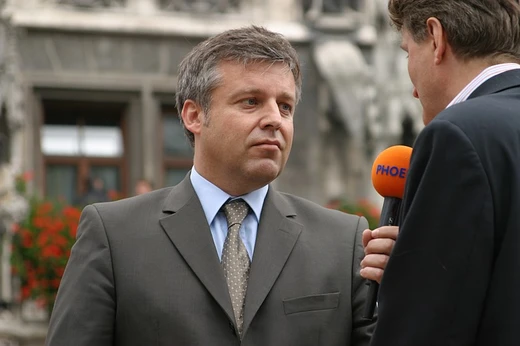
Jamal Khashoggi
Saudi journalist and dissident assassinated at the Saudi consulate in Istanbul.

Jamal Ahmad Hamza Khashoggi was a Saudi journalist, dissident, author, columnist, and editor. He was assassinated at the Saudi consulate in Istanbul on 2 October 2018 by agents of the Saudi government at the behest of Crown Prince Mohammed bin Salman. The murder created tensions between the U.S. and Saudi Arabia, but did not meaningfully disrupt relations between the two countries.
- known_for
- Assassination at Saudi consulate; posthumous inclusion in Time's 'The Guardians
Verified Timeline
Lore & Background
Khashoggi was born in Medina on 13 October 1958. His Turkish ancestors made the Hajj from Kayseri to Mecca some four centuries earlier and decided to stay; their family surname means 'spoon maker' (kaşıkçı) in Turkish. He received his elementary and secondary education in Saudi Arabia and obtained a Bachelor of Business Administration from Indiana State University in the United States in 1982. He began his career as a regional manager for Tihama Bookstores from 1983 to 1984, later working as a correspondent for the Saudi Gazette and as an assistant manager for Okaz from 1985 to 1987. He served as managing editor and acting editor-in-chief of Al Madina from 1991 to 1999, and as deputy editor-in-chief of Arab News from 1999 to 2003. Khashoggi fled Saudi Arabia in September 2017 and went into self-imposed exile, saying the Saudi government had 'banned him from Twitter.' He wrote newspaper articles critical of the Saudi government, including opposing the Saudi Arabian-led intervention in Yemen. On 2 October 2018, he entered the Saudi consulate in Istanbul to obtain documents related to his planned marriage but was never seen leaving. An inspection of the consulate by Saudi and Turkish officials took place on 15 October. Initially, the Saudi government denied the death, but following shifting explanations, the attorney general eventually stated the murder was premeditated. By 16 November 2018, the CIA had concluded that Mohammed bin Salman ordered Khashoggi's assassination.
Reader's Guide
Khashoggi's significance lies in his role as a prominent Saudi journalist who became a dissident after fleeing Saudi Arabia in September 2017. He wrote critical articles about the Saudi government, including its intervention in Yemen and its crackdown on dissent. In a 3 April 2018 Post column, he wrote that Saudi Arabia 'should return to its pre-1979 climate' and that 'women today should have the same rights as men.' He criticized the Saudi war on Yemen, writing 'The longer this cruel war lasts in Yemen, the more permanent the damage will be.' He also criticized the Saudi blockade against Qatar, the dispute with Lebanon, the diplomatic dispute with Canada, and the arrest of women's rights advocates like Loujain al-Hathloul. His assassination at the Saudi consulate in Istanbul on 2 October 2018, later determined by the CIA to have been ordered by Crown Prince Mohammed bin Salman, sparked international outrage and highlighted issues of press freedom and state-sponsored violence. Despite tensions, U.S.-Saudi relations were not meaningfully disrupted. On 11 December 2018, Khashoggi was posthumously named Time magazine's Person of the Year along with other journalists who faced political persecution for their work; Time referred to him as a 'Guardian of the Truth.'
Did You Know?
- Khashoggi's family surname means 'spoon maker' (kaşıkçı) in Turkish.
- He obtained a Bachelor of Business Administration from Indiana State University in 1982.
- He served with the Saudi Arabian Intelligence Agency during the Soviet invasion in Afghanistan.
- Khashoggi was the nephew of arms dealer Adnan Khashoggi and the first cousin of Dodi Fayed.
- He was posthumously named Time magazine's Person of the Year on 11 December 2018.
From Bookstore Shelves to Editorial Power
Jamal Khashoggi's professional path unfolded over more than two decades, carrying him from modest beginnings to the helm of major Arabic-language publications. After earning a Bachelor of Business Administration from Indiana State University in 1982, he spent a year as a regional manager at Tihama Bookstores before pivoting into journalism. He served as a correspondent for the Saudi Gazette and as an assistant manager at Okaz in the mid-1980s, then reported for outlets including Asharq Al-Awsat, Al Majalla, and Al Muslimoon. During this period he also served with the Saudi Arabian Intelligence Agency and may have worked alongside the United States during the Soviet invasion of Afghanistan. From 1991 to 1999 he held the dual roles of managing editor and acting editor-in-chief at Al Madina, while simultaneously reporting from Afghanistan, Algeria, Kuwait, Sudan, and across the broader Middle East. He went on to serve as deputy editor-in-chief of Arab News from 1999 to 2003. Later he became editor of Al Watan, a newspaper regarded as a voice for Saudi progressives, a position that placed him squarely in the crosshairs of the state.
A Voice for Reform and Free Expression
Khashoggi's political writings painted a vision of Saudi Arabia that balanced religious identity with modern civil liberties. In a 2018 Washington Post column he argued the Kingdom should return to its pre-1979 climate, when the government had kept hard-line Wahhabi traditions in check, and insisted that women deserved equal rights and all citizens the freedom to speak without fear of imprisonment. He proposed that Saudis find a way to accommodate secularism alongside Islam, pointing to Turkey as a possible model. His posthumous essay, published in October 2018, articulated a broader hope: that an independent Arab press, freed from government control, would empower ordinary people to confront the structural problems their societies faced. Yet his criticism was pointed. He condemned the punitive arrests of women's-rights advocates Loujain al-Hathloul, Eman al-Nafjan, and Aziza al-Yousef, and he called on Crown Prince Mohammed bin Salman to end what he described as Yemen's "cruel war," warning that the longer it continued, the more permanent the damage to Yemeni lives would become.
The Istanbul Consulate and a State's Denial
On the morning of 2 October 2018, Khashoggi walked into the Saudi consulate in Istanbul carrying a simple purpose: to collect documents needed for his planned marriage. He never walked out. Reports soon emerged that he had been killed and dismembered inside the building. Saudi and Turkish officials conducted a joint inspection of the consulate on 15 October, yet the Saudi government initially denied that he had died there at all. Over the following weeks the official narrative shifted repeatedly until Saudi Arabia's attorney general was forced to acknowledge that the killing had been premeditated. By 16 November 2018 the Central Intelligence Agency had reached its own conclusion: Crown Prince Mohammed bin Salman had ordered the assassination. The revelation sent ripples through Washington and Riyadh, straining the already complex bilateral relationship. Still, despite the gravity of the finding, the episode did not fundamentally alter the trajectory of American-Saudi ties, a fact that drew sharp criticism from those who argued the response was far too muted for a state-sanctioned murder of a prominent journalist.
Posthumous Recognition and Enduring Questions
Khashoggi's final act of public expression came after his death. On 17 October 2018, a previously written article titled "What the Arab World Needs Most Is Free Expression" appeared, laying out his hopes for an independent press in the Arab world and his belief that such a press would allow ordinary citizens to address the deep structural problems their societies confronted. Just weeks later, on 11 December 2018, Time magazine named him Person of the Year, honoring him alongside other journalists who had faced political persecution for their work. The magazine's cover described him as a "Guardian of the Truth." His story also carried a personal dimension: his family's roots traced back to Turkish ancestors who had made the Hajj from Kayseri to Mecca four centuries earlier and chosen to remain, and his surname, meaning "spoon maker" in Turkish, was a quiet reminder of that migration. He was the nephew of Adnan Khashoggi and the first cousin of Dodi Fayed. His murder left a void in Saudi public discourse that, as of the available record, remained unfilled.
Frequently Asked Questions
Who is Jamal Khashoggi?
Jamal Ahmad Hamza Khashoggi was a Saudi journalist, columnist, editor, and political dissident who became internationally known for his critical writing about the Saudi leadership.
What was Jamal Khashoggi's role in journalism?
He worked as a columnist and editor, using his platform to voice opposition to the policies of Saudi Arabia's ruling establishment. His work as a dissident voice made him a target of the Saudi government.
How does Jamal Khashoggi's story end?
On 2 October 2018, he was killed inside the Saudi consulate in Istanbul by agents sent at the direction of Crown Prince Mohammed bin Salman. His death made him a symbol of the suppression of press freedom.
Why is Jamal Khashoggi important?
His murder became one of the most high-profile international incidents involving a journalist in the modern era. He was also posthumously featured in Time's 'The Guardians and the War on Truth' Person of the Year recognition.
What was the diplomatic aftermath of Jamal Khashoggi's assassination?
The killing generated significant tension between the United States and Saudi Arabia. However, the broader strategic relationship between the two countries was not meaningfully disrupted in the long run.
More in Journalists & Broadcasters 1-19
Spotted an error? Know more?
This is a living reference — every entry is fact-audited, and reader corrections feed straight into our audit queue. Suggest an edit · See this site's audit record