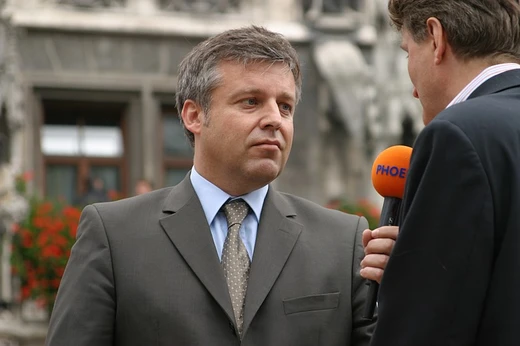
Larry King
American host of over 50,000 radio and TV interviews.

Larry King (born Lawrence Harvey Zeiger; November 19, 1933 – January 23, 2021) was an American television and radio host, author, and spokesman. He gained national prominence beginning in 1978 as host of The Larry King Show, an all-night nationwide call-in radio program on the Mutual Broadcasting System, and later hosted the nightly interview program Larry King Live on CNN from 1985 to 2010. Over his career, he conducted over 50,000 interviews on radio and television.
- born
- November 19, 1933, Brooklyn, New York
- died
- January 23, 2021
- field
- Television and radio host, author, spokesman
- nationality
- American
- known_for
- Hosting The Larry King Show and Larry King Live
Verified Timeline
Lore & Background
King was born and raised in Brooklyn, New York, to Jewish parents who immigrated from what is now Belarus in the 1920s. He attended Lafayette High School, a public high school in Brooklyn. When he was nine years old, his father died of a heart attack, resulting in his family receiving government assistance; King lost interest in his schoolwork. After graduating, he worked to help support his mother and desired a career in radio broadcasting. King began his radio career in Miami in 1957 at station WAHR (now WMBM), initially cleaning up and performing miscellaneous tasks before being put on air as a disc jockey. His first broadcast was on May 1, 1957, working from 9 a.m. to noon, and he also did two afternoon newscasts and a sportscast, paid $50 a week. He adopted the name 'King' after the general manager declared his birth name too difficult to remember, choosing it from a Miami Herald advertisement for King's Wholesale Liquor. He conducted interviews on a mid-morning show for WIOD from Pumpernik's Restaurant in Miami Beach; his first interview was with a waiter, and two days later singer Bobby Darin became his first celebrity interview guest. King later hosted Miami Undercover on WPST-TV in 1960 and served as a color commentator for the Miami Dolphins during their 1970 season and most of their 1971 season. In 1978, King began hosting The Larry King Show on the Mutual Broadcasting System, a midnight-to-5:30 a.m. program that grew from 28 affiliates to over 500. He then hosted Larry King Live on CNN from 1985 to 2010, known for a direct, non-confrontational approach. Later shows included Larry King Now (2012–2020) and Politicking with Larry King (2013–2020), airing on Hulu, Ora TV, and RT America.
Reader's Guide
Larry King's significance lies in his long-running, high-volume interview programs that became platforms for newsmakers, celebrities, and politicians to speak directly to a national audience. His non-confrontational style on Larry King Live attracted figures such as Ross Perot, who announced his 1992 presidential bid on the show, and hosted a 1993 debate between Al Gore and Perot that became CNN's most-watched segment until 2015. King's radio show, The Larry King Show, pioneered an all-night call-in format that built a devoted audience called 'King-aholics', with regular callers using pseudonyms like 'The Numbers Guy' and 'The Portland Laugher'. His career spanned from local Miami radio in the 1950s to national television and streaming into 2020. King received two Peabodys, an Emmy, ten Cable ACE Awards, and a Lifetime Achievement Award at the 32nd Annual News and Documentary Emmys. He also appeared in television series and films, usually playing himself. His legacy is that of a ubiquitous interviewer who conducted over 50,000 interviews across media decades.
Did You Know?
- King legally changed his name to Larry King after a manager said his birth name was 'too German, too Jewish and not showbusiness enough'.
- His first celebrity interview guest was singer Bobby Darin, who walked into Pumpernik's Restaurant after hearing King's radio show.
- King conducted over 50,000 interviews on radio and television during his career.
- He was a color commentator for the Miami Dolphins during their 1970 season and most of their 1971 season.
- King's final words on the last edition of Larry King Live were, 'I... I, I don't k' before the show concluded.
From Brooklyn to the Airwaves: The Making of Larry King
Born Lawrence Harvey Zeiger on November 19, 1933, in Brooklyn, New York, the future media icon grew up in a rowhouse in the Bedford-Stuyvesant or Brownsville area of the borough. His parents, Orthodox Jews who had emigrated from what is now Belarus during the 1920s, worked modest trades—his mother Jennie as a garment worker originally from Minsk, his father Aaron as a restaurant owner and defense-plant worker from Pinsk. When Larry was just nine, his father suffered a fatal heart attack, thrusting the family onto government assistance and leaving a young boy who lost his focus on schoolwork. He eventually graduated from Lafayette High School, a public institution in Brooklyn, and spent his adolescence in Bensonhurst. From an early age, however, he harbored a fierce desire to work in radio broadcasting, a dream that would soon pull him far from his mother's Brooklyn home.
Miami: Where a Name Was Forged and a Career Ignited
A CBS production supervisor named James F. Sirmons pointed the young Zeiger toward Florida, a booming media market hungry for fresh voices. After initial setbacks, he landed a janitorial and odd-jobs position at WAHR in Miami Beach. When a regular announcer abruptly walked out, management threw him on the air. His debut broadcast came on May 1, 1957, as a morning disc jockey earning just fifty dollars a week. The station's general manager, finding Zeiger too German, too Jewish, and lacking showbiz flair, pushed him to pick something catchier. Minutes before going live, he spotted a Miami Herald ad for King's Wholesale Liquor and chose King as his surname, legally adopting the name within two years. His big break in interviewing came at Pumpernik's Restaurant in Miami Beach, where he conducted a mid-morning show on WIOD. His very first guest was a waiter who happened to walk in. Two days later, Bobby Darin strolled through the door, becoming his first celebrity interviewee.
The Larry King Show: A Nation's Late-Night Confidant
On January 30, 1978, King took over a nightly coast-to-coast radio slot on the Mutual Broadcasting System, inheriting the program from Herb Jepko and Long John Nebel. What followed was a cultural phenomenon. Airing live Monday through Friday from midnight to 5:30 a.m. Eastern Time, the show built a fiercely loyal following that dubbed itself King-aholics. The format was deceptively simple: a celebrity guest anchored the first hour, callers extended the conversation for the next two, and the 3 a.m. Open Phone America segment let listeners tackle any subject they wished. Western stations often broadcast the Open Phone portion live while the guest interview played on tape delay. King cultivated a cast of beloved regular callers, bestowing nicknames like The Numbers Guy, The Chair, and The Portland Laugher. This radio empire launched him into television, where from 1985 to 2010 he hosted the nightly interview program Larry King Live on CNN. Across his entire career, he conducted more than fifty thousand interviews.
Awards, Final Chapters, and an Enduring Legacy
King's body of work earned him two Peabody Awards, a single Emmy, and a remarkable ten Cable ACE Awards. He also received a Lifetime Achievement Award at the 32nd Annual News and Documentary Emmys and was inducted into the Broadcasters' Hall of Fame in 1996. Beyond the microphone, he made appearances in television series and films, typically playing a version of himself. Even as the media landscape shifted dramatically, King adapted. From 2012 to 2020, he hosted Larry King Now, streaming across Hulu, Ora TV, and RT America. Beginning in 2013, he added Politicking with Larry King, a weekly political talk show distributed on the same three platforms. He also served as an author and public spokesman throughout his career. Remarkably, he remained professionally active right up until his death on January 23, 2021. From a Brooklyn rowhouse to a national institution, his story remains one of relentless curiosity, adaptability, and an almost superhuman ability to make strangers feel heard.
Frequently Asked Questions
Who is Larry King?
Larry King, born Lawrence Harvey Zeiger in Brooklyn in 1933, was an American television and radio host, author, and public spokesman. He is best remembered for his decades-long career conducting interviews with celebrities, politicians, and public figures across both radio and television.
What shows did Larry King host?
He first rose to national attention in 1978 with The Larry King Show, an overnight call-in program on the Mutual Broadcasting System. He then moved to CNN in 1985 to anchor Larry King Live, a nightly interview show he hosted until 2010.
How many interviews did Larry King conduct in his career?
Across his radio and television career, Larry King sat down with more than 50,000 guests for one-on-one conversations. That volume of interviews made him one of the most prolific interviewers in broadcast history.
When and where did Larry King die?
Larry King passed away on January 23, 2021, at the age of 87. He was born in Brooklyn, New York, on November 19, 1933.
Why is Larry King considered important in broadcasting?
He helped reshape the late-night interview format by keeping a conversational, low-pressure style that made even the most guarded guests open up. His 25-year run on CNN and his earlier radio success set a template for personality-driven talk programming that influenced countless hosts who came after him.
More in Journalists & Broadcasters 1-19
Spotted an error? Know more?
This is a living reference — every entry is fact-audited, and reader corrections feed straight into our audit queue. Suggest an edit · See this site's audit record